
Why Mixing PVC scrap with PET is a Disaster for Your Recycling Line
Imagine spending days washing and processing tons of plastic bottles, only to have the buyer reject the entire batch. This is a common nightmare for recycling plant owners, and the most frequent culprit is hidden in plain sight: transparent polyvinyl chloride (PVC).
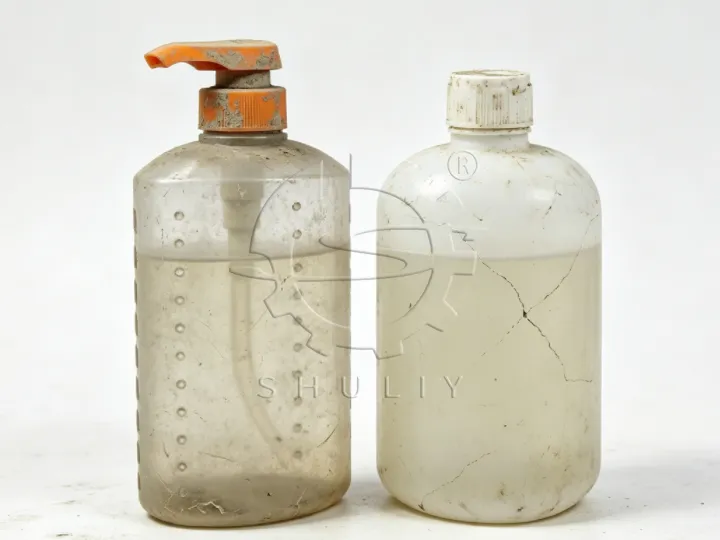
Visually, a clear PVC bottle looks exactly like a clear PET water bottle. However, allowing them to mix is like mixing salt into a sugar jar. Failing to control PVC contamination in PET recycling won’t break your washing machines, but it will completely ruin the plastic material itself. To understand why we must avoid PVC at all costs, we need to look at what happens when your buyer tries to use the plastic flakes you sell them.
What Happens When Your Buyer Melts the Flakes?
Your customers buy recycled PET flakes to melt them down and make new products, like polyester clothing fibers or transparent packaging boxes. This melting happens at very high temperatures, usually around 280°C.
Here is the core problem: PET melts nicely at 280°C, but PVC cannot handle that heat. It burns. When even a tiny piece of PVC burns inside the high-temperature melting machine, it produces an acid gas. This acid acts like poison to the surrounding PET plastic. It destroys the strong structure of the PET, causing it to become very brittle and turn a dark, ugly yellowish-brown. If the plastic is brittle and discolored, it cannot be pulled into fine clothing fibers.
To guarantee good PET flake purity, most factories will refuse to buy your material if it contains more than 50 tiny pieces of PVC hidden among one million pieces of PET.
The Trap: Why Washing Cannot Fix the Problem
When plant managers hear they have a PVC problem, they often try to wash the plastic longer or use hotter water. This simply does not work.
Most recycling lines use sink-float separation tanks to clean the material. These water tanks work on a simple rule: light things float, heavy things sink. Plastic bottle caps are light, so they float to the top and get skimmed away. The trap here is that PVC and PET weigh exactly the same in water. Because both materials are heavy, they both sink straight to the bottom. Water cannot separate them.
The Shuliy Group Solution: Catch it Before You Crush It
Because PVC contamination in PET recycling cannot be solved with water, you must solve it before the bottles are chopped into small pieces. Once a PVC bottle enters the crusher and gets chopped into thousands of flakes, finding and removing them is like finding a needle in a haystack.
Shuliy Group designs recycling lines to catch the PVC early. We use a simple but highly effective two-step defense:
- Take off the “Clothes”: First, the bottles go through a heavy-duty bottle label remover. This machine tears off the colorful shrink labels. You cannot identify what kind of plastic a bottle is if it is covered by a label.
- Use Human Eyes: Once the labels are gone and the clear bottles are exposed, they move across a slow manual sorting platform. Here, trained workers look for specific clues. For example, if you squish a PVC bottle, the crease turns a distinct white color, unlike PET. Workers pull these bad bottles off the belt by hand.
The key takeaway is simple: managing PVC isn’t about buying better washing equipment; it is about putting the right sorting tools in place before the crushing stage.