为什么将PVC废料与PET混合会对您的回收线造成灾难
Imagine spending days washing and processing tons of plastic bottles, only to have the buyer reject the entire batch. This is a common nightmare for recycling plant owners, and the most frequent culprit is hidden in plain sight: transparent polyvinyl chloride (PVC).
Visually, a clear PVC bottle looks exactly like a clear PET water bottle. However, allowing them to mix is like mixing salt into a sugar jar. Failing to control PVC contamination in PET recycling won’t break your washing machines, but it will completely ruin the plastic material itself. To understand why we must avoid PVC at all costs, we need to look at what happens when your buyer tries to use the plastic flakes you sell them.
当买家熔化片料时会发生什么?
您的客户购买回收的PET片料,用于熔化制造新产品,比如聚酯纤维或透明包装盒。这种熔化过程在非常高的温度下进行,通常在280°C左右。
核心问题在于:PET在280°C下可以很好地熔化,但PVC无法承受那样的高温。它会燃烧。当一小块PVC在高温熔融机内燃烧时,会产生酸性气体。这种酸气像毒药一样对周围的PET塑料产生毒害作用。它破坏PET的坚固结构,使其变得非常脆弱,变成暗淡、丑陋的黄褐色。如果塑料变得脆弱且变色,就无法拉成细纤维衣料。
为了保证PET片料的纯度,大多数工厂会拒绝购买含有超过50个微小PVC碎片的材料,这些碎片隐藏在一百万个PET碎片中。
陷阱:为什么清洗不能解决问题
当工厂经理听说他们有PVC问题时,通常会尝试延长清洗时间或使用更热的水。这根本不起作用。
Most recycling lines use sink-float separation tanks to clean the material. These water tanks work on a simple rule: light things float, heavy things sink. Plastic bottle caps are light, so they float to the top and get skimmed away. The trap here is that PVC and PET weigh exactly the same in water. Because both materials are heavy, they both sink straight to the bottom. Water cannot separate them.
舒利集团的解决方案:在破碎之前捕捉它
因为PET回收中的PVC污染无法用水解决,所以必须在瓶子被切碎成小片之前解决。一旦PVC瓶子进入破碎机并被切成数千片,找到并去除它们就像大海捞针一样困难。
舒利集团设计了早期捕捉PVC的回收线。我们采用一种简单但非常有效的两步防御措施:
- 摘掉“衣服”: 首先,瓶子经过重型的 瓶子标签去除器. 这台机器可以撕掉彩色收缩标签。如果瓶子被标签覆盖,就无法识别出瓶子是哪种塑料。
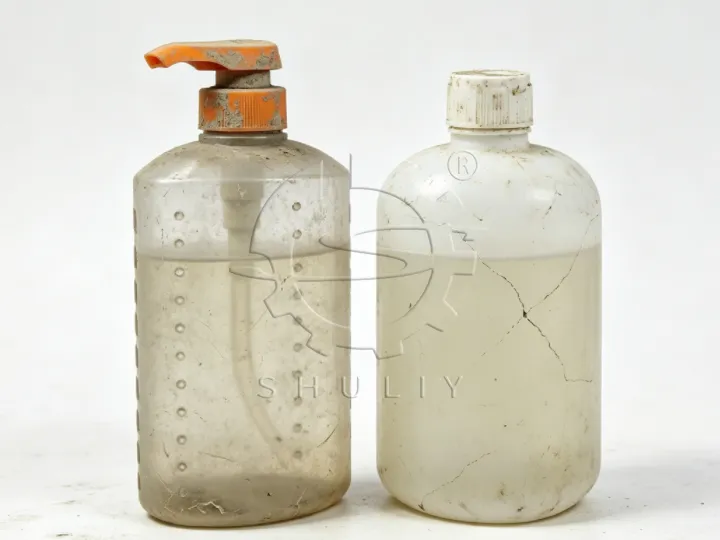
- 用肉眼观察: 一旦标签被去除,透明瓶子暴露出来,它们就会在缓慢的传送带上移动, 手动分拣平台. 这里,经过培训的工人会寻找特定的线索。例如,如果你挤压PVC瓶子,折痕会变成明显的白色,而PET则不会。工人会用手将这些不良瓶子从传送带上摘下。
关键的要点很简单:管理PVC不是购买更好的清洗设备,而是在破碎阶段之前放置正确的分拣工具。