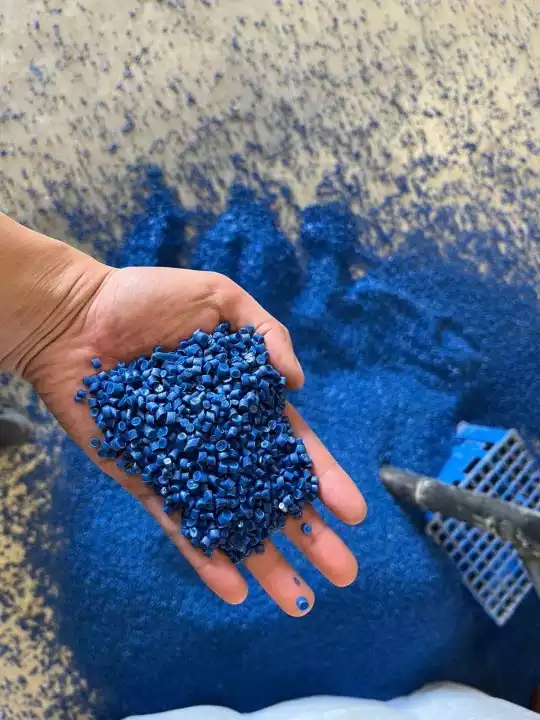
Wie lässt sich das Problem der schwarzen Flecken auf Kunststoffpellets lösen?
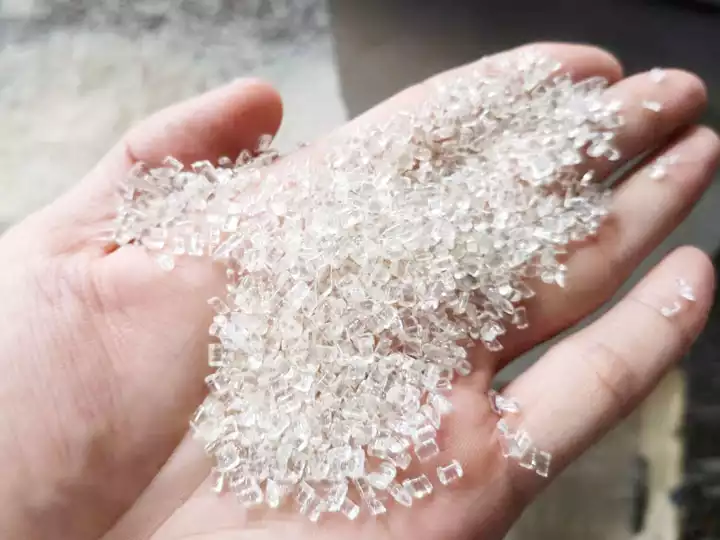
Bei der Kunststoffgranulierung kommt es relativ häufig zu schwarzen Flecken auf den Pellets. Ist es das Problem von Kunststoffpelletmaschine, das Rohstoffproblem oder andere Faktoren, die zu einem solchen Phänomen führen? Tatsächlich ist das Problem der schwarzen Flecken im Granulationsprozess ein häufiges Fehlerphänomen, insbesondere bei hellen Pellets, die offensichtlicher sind. Wie können wir dieses Problem also verbessern?
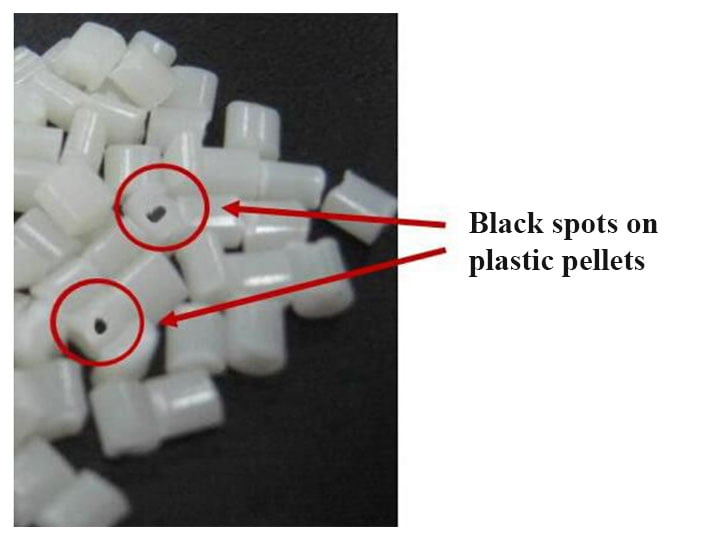
Diese schwarzen Flecken sind die verbleibende thermische Verschlechterung des Kunststoffs der Kunststoffpelletmaschine nach dem Hartmetall. Um die Qualität der Kunststoffpellets sicherzustellen, sollte das Personal das Hartmetall der Maschine häufig reinigen.
Use harder plastic or its return material and white mineral oil for cleaning, and the temperature should be appropriately increased by 10~15°C.
At this time, the plasticizing ability of the small extruder should be considered. For large and medium-sized extruders that can plasticize ultra-high molecular weight plastics, they can be cleaned with ultra-high molecular weight plastics or their return materials and white mineral oil.
Because the hardness of ultra-high molecular weight plastics is better, and when the temperature is high, the cleaning object will be softened, so that it becomes easy to fall off, which is beneficial to the carbides being carried out by the plastic melt.
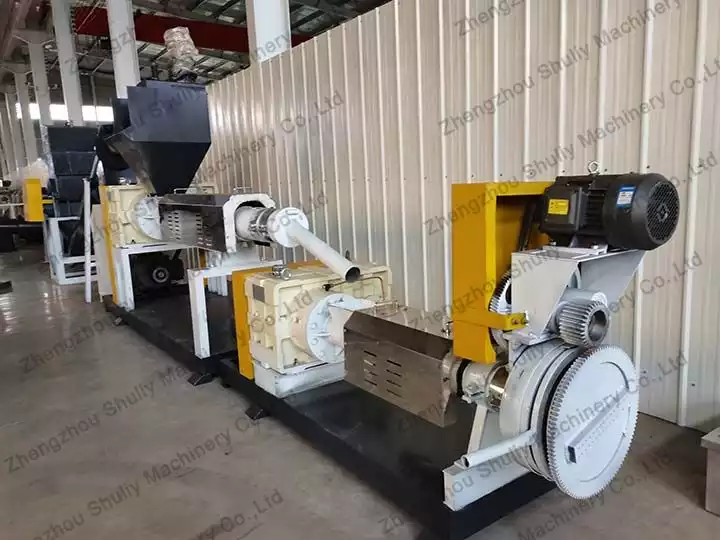
During the cleaning process, the speed of the plastic pellet machine can be repeatedly switched between low speed and high speed. If there is still a spare motor load, you can repeatedly stop and restart the extruder several times during the operation, which can improve the cleaning effect.
When the carbide in the plastic melt is obviously reduced, gradually adjust to the appropriate temperature, then the normal production.