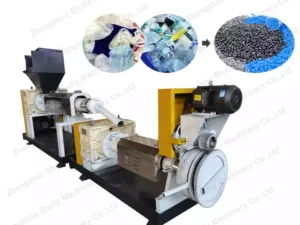
視覚ガイド:ストランドペレット化プロセスの7つの主要ステップ
プラスチック押出成形技術の世界には、溶融高分子をペレットへと変えるいくつかの方法があります。水中ペレタイジングのような選択肢にも利点はありますが、多くのリサイクル用途で最も広く使用され、信頼性が高くコスト効果の高い方法はストランドペレタイジングプロセスです。
しかし、ストランドペレタイザーがどのように機能するかは、しばしば複雑なプロセスとして見られます。このガイドは、それを7つの明確で論理的なステップに分解します。これらのプラスチックペレタイジングのステップを理解することは、高性能のストランドペレタイザー機の特性と、リサイクルライン全体の効率性にどのように貢献するかを理解する鍵です。
ステップ 1: 安定した溶融物の準備(押出し)
全体のプロセスは押出機の内部から始まります。プラスチックくずは溶かされ、混合され、均質な溶融ポリマーへと一様化されます。この溶融物の安定性は、後で均一なストランドを形成するために重要です。ここで二段階の押出プロセスが大きな利点を提供し、溶融物が十分に脱気され、揮発性物質が除去された状態で次に進むことを保証します。
ステップ 2: 高効率のプラスチック溶融物ろ過
溶融プラスチックを成形できるようになる前に、最終的な固形分 contaminantを除去するために、堅牢なスクリーンパックを通過させて浄化します。安定したろ過プロセスは、油圧式スクリーンチェンジャーによってサポートされ、圧力変動を防ぎ、流れを乱し最終ペレット品質に影響を与えることを防ぎます。
ステップ 3: プラスチック押出機ダイヘッドでのストランド成形
清浄な溶融ポリマーは、複数の小さく正確に drilled holes を持つ厚い鋼板のダイヘッドを通して押し出されます。これらの穴からプラスチックが出ると、連続的で均一なストランドを形成します。ダイヘッドの設計は、すべてのストランドが一定の直径になることを確保するために重要です。
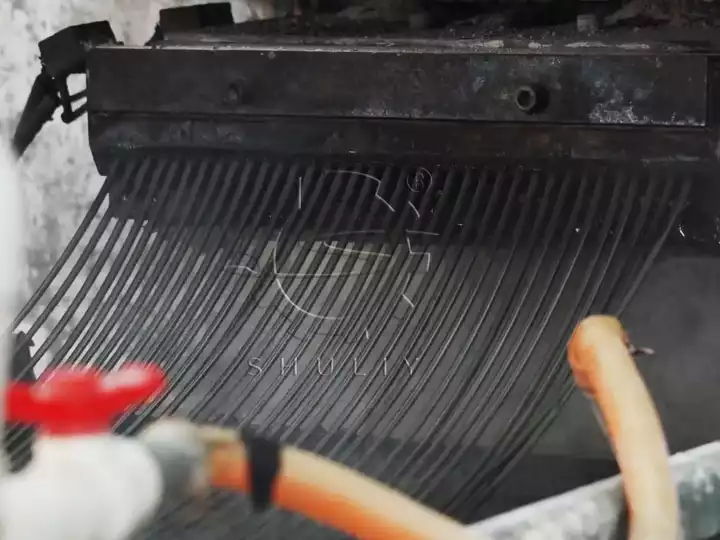
ステップ 4: プラスチックの冷却タンクでの急速凝固
熱く柔軟なストランドはすぐにプラスチック用の冷却タンクへと移動します。通常は循環水で満たされた長いステンレス製トラフです。この水浴はストランドを急速に急冷し、溶融状態から固体・柔軟なロッドへと固化させます。
ステップ 5: ストランドの脱水
As the strands exit the water bath, they pass through a dewatering unit to remove the water carried on their surfaces. This is often a powerful air knife or a series of rollers that blasts, wipes, or squeezes off excess surface water as the strands continue moving toward downstream equipment.
The plastic strands must be sufficiently dry before entering the final cutting stage to ensure a clean, consistent cut, reduce sticking or smearing at the cutter, and prevent unwanted moisture from remaining in the final product.
ステップ 6: プラスチックペレットカッターによる正確な切断
The cooled, dry strands are now fed into the heart of the system: the プラスチックペレットカッター. In a typical roller cutter pelletizer, a set of feed rolls pulls the strands at a consistent speed into a high-speed rotating cutter assembly. The precision blades chop the strands into short, cylindrical pellets of a uniform length.
ステップ 7: 品質管理 – 篩いと保管
The final step is quality assurance. The newly cut pellets are passed over a vibrating sieve. This separates any oversized or undersized pieces (“fines”) and helps to further cool the pellets, preventing them from sticking together in the storage silo. The result is a batch of high-quality, uniform plastic pellets ready for bagging.
This entire 7-step strand pelletizing process is powered by a robust set of plastic recycling line components. The performance of the core strand pelletizer machine—determined by its motor power, screw design, and build quality—dictates the quality and consistency of the final output.
By understanding each step of the process, you can better appreciate how high-quality machinery leads to a superior final product, whether you are performing PE film granulation or recycling other thermoplastics.
このプロセスを駆動する機械を見てみませんか?私たちの完全なストランドペレタイジングソリューションの技術仕様を探ってください。