
Engineering a Heavy-Duty Plastic Recycling Business in Iraq
Infrastructure Rebuilding and Scrap Dynamics in Baghdad
Ongoing reconstruction and civil infrastructure projects across Baghdad, Basra, and Erbil have generated substantial quantities of scrap polymers. Two major waste streams dominate the regional market: thick-walled high-density polyethylene (HDPE) water supply and corrugated sewage pipes from municipal works, alongside degraded low-density polyethylene (LDPE) greenhouse film and drip irrigation tapes from agricultural zones.
In southern and central Iraq, ambient summer temperatures routinely exceed 50°C. Sunlight and fine desert dust degrade post-use plastics quickly, while regional manufacturing remains heavily reliant on polymer pellets imported from neighboring Turkey and Iran.
Recognizing this market disparity, our client—a construction materials distributor based in Baghdad—decided to establish a local polymer recovery operation. Developing a viable plastic recycling business in Iraq requires machinery capable of handling heavy wall thicknesses and abrasive desert sand without overheating in harsh climate conditions.
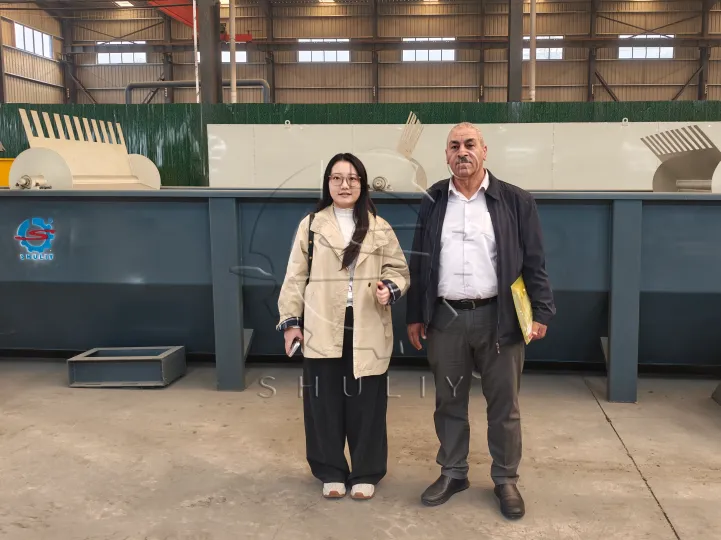
The plastic rinsing tank behind the client is used to washing waste plastic pieces. Know more: tank ya kuogea ya plastiki
From CGO Airport to Workshop: Preparing for Middle East Operating Conditions
Long-distance project evaluations require mutual respect and operational clarity. After a multi-leg flight from Baghdad, our team received the client late at night at Zhengzhou Xinzheng International Airport (CGO), arranging dedicated transport and certified Halal dining to ensure rest before technical sessions.
The following morning at our facility, discussions bypassed generic sales pitches to address the client’s operational pain points:
- Feed Stock Thickness: Standard granulators jam or trip thermal overloads when processing solid SDR11 pipe offcuts with 20–30 mm wall thickness.
- Ambient Heat and Fine Dust: Operating in Baghdad requires cooling solutions that prevent control panel burnouts and hydraulic oil breakdown.
- Supplier Selection: The client needed a dependable plastic washing line manufacturer for Iraq capable of delivering comprehensive sand separation and water-saving filtration.
Factory Testing: Size Reduction and Thermal Management for High-Temperature Climates
During the live factory trial, we processed the client’s thick-walled HDPE pipe and agricultural film samples through an integrated sizing and extrusion setup. The combination of a single-shaft shredder and our 55 kW SLSP-1000 granulator—equipped with shock-resistant 60Si2Mn blades and a ø50 mm screen—effortlessly maintained an output exceeding 1,000 kg/h without rotor stalling.
To counter Baghdad’s 50°C summer heat and fine silica dust, the electrical cabinet was isolated using positive-pressure industrial air conditioning. The material was then fed directly into our two-stage mstari wa plastiki ya pelletizing, where multi-zone vacuum venting evacuated entrapped gases and moisture, and a hydraulic dual-station screen changer ensured uninterrupted filtration.
The resulting dense, bubble-free granules validated the system as a dependable mashine ya plastiki pelletizing in Middle East facilities where heavy feedstock and harsh ambient conditions are common.
Muhtasari
Before his departure, the client expressed high satisfaction with both our transparent engineering standards and our attentive reception throughout his visit, noting that our tailored solutions fully addressed his operational concerns for the Iraqi market.
With technical specifications and factory layout drawings finalized, both sides look forward to establishing a long-term partnership in the coming weeks. If you are also interested in launching a sustainable plastic recycling project or upgrading your current plant efficiency, we warmly invite you to contact our engineering team and schedule a visit to our manufacturing facility for a live, hands-on demonstration.