
¿Por qué tu próxima trituradora de plástico de alta resistencia necesita un abridor hidráulico de tapas?
Al ampliar una operación de reciclaje, el tamaño físico de la maquinaria aumenta junto con la capacidad. En una instalación a gran escala, una trituradora de plástico de alta resistencia es la pieza clave de la línea de producción. Sin embargo, a medida que estas máquinas aumentan en potencia, sus componentes—específicamente la tolva de alimentación y el compartimento superior—se vuelven significativamente más pesados, alcanzando frecuentemente pesos que superan varios cientos de kilogramos. Para los gerentes de planta, la transición a equipos de alta capacidad requiere un cambio en el enfoque hacia la accesibilidad del mantenimiento y la seguridad del operador.
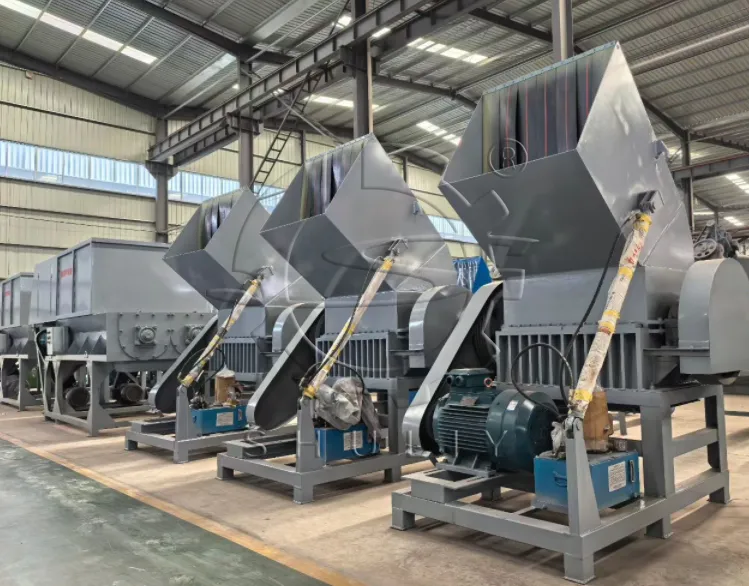
La Lógica de Seguridad: Cómo Cambiar las Cuchillas de la Trituradora de Plástico de Forma Segura
La razón principal para integrar un sistema hidráulico en una trituradora de plástico de alta resistencia es la gestión del riesgo. El mantenimiento estándar, específicamente cómo cambiar las cuchillas de la trituradora de plástico de forma segura, implica un acceso frecuente a la cámara de corte. En máquinas más pequeñas, un resorte de gas o una palanca manual pueden ser suficientes. Sin embargo, en modelos industriales como el Shuliy SLSP-800, la carcasa superior es una estructura de acero masiva.
Intentar abrir un componente tan pesado manualmente o con equipo improvisado de elevación representa un riesgo severo de lesiones por aplastamiento. Un abridor hidráulico de tapas proporciona una elevación controlada, estable y motorizada. Este dispositivo asegura que, una vez abierto el compartimento, permanezca bloqueado en su lugar mediante presión hidráulica, permitiendo que el equipo de mantenimiento se concentre completamente en la tarea de precisión de la separación de cuchillas y el torque de los tornillos sin la amenaza inminente de un cierre accidental.
Impacto Económico: Reducir el Tiempo de Inactividad en el Reciclaje de Plástico
La eficiencia en una planta de reciclaje se mide por el tiempo de actividad. Cada hora dedicada al mantenimiento es una hora de producción perdida. Reducir el tiempo de inactividad en el reciclaje de plástico es una de las formas más efectivas de aumentar el ROI anual de tu planta.
In a typical production environment, blades require sharpening or replacement every few weeks, depending on the abrasiveness of the material. Furthermore, changing between different types of plastic (e.g., from HDPE to PP) requires a deep clean of the chamber to prevent cross-contamination. With a manual system, opening and re-securing the machine can take two technicians over an hour. An easy maintenance granulador de plastico equipped with a hydraulic opener reduces this process to less than five minutes at the push of a button. Over a year, the cumulative time saved directly translates into hundreds of additional tons of processed material.
La Ventaja Técnica: Mantenimiento Hidráulico Asistido en Trituradoras de Plástico
La ingeniería detrás del mantenimiento hidráulico asistido en trituradoras de plástico de alta resistencia es sencilla pero efectiva. Generalmente consiste en una estación de bomba hidráulica dedicada y uno o dos cilindros de alta resistencia montados en el marco y en la tolva.
This system does more than just lift; it protects the structural integrity of the machine. Manual lifting often involves uneven force distribution, which can strain the hinges and lead to chamber misalignment over time. A hydraulic system ensures a perfectly linear and balanced opening path. This precision helps maintain the tight tolerances required between the rotor and the bed knives, which is essential for producing uniform regrind and minimizing dust creation in your heavy-duty trituradora de plastico.
Elegir la Configuración Adecuada
Aunque un abridor hidráulico es un “imprescindible” para máquinas de alta capacidad, es importante seleccionar una configuración que se adapte a las necesidades específicas de tu instalación. En Shuliy Machinery, a menudo recomendamos esta característica para cualquier trituradora de plástico de alta resistencia con una potencia de motor superior a 30 kW. Es una inversión que se amortiza con mejores registros de seguridad y costos laborales significativamente menores por ciclo de mantenimiento.
Si actualmente estás evaluando una nueva trituradora de plástico de desecho para tu planta, considera los costos operativos a largo plazo. Una máquina que sea fácil y segura de mantener será una que permanezca en condiciones óptimas durante décadas.